Free VPNs Are Not Free: The True Price Your Data Pays for 'No-Cost' Privacy
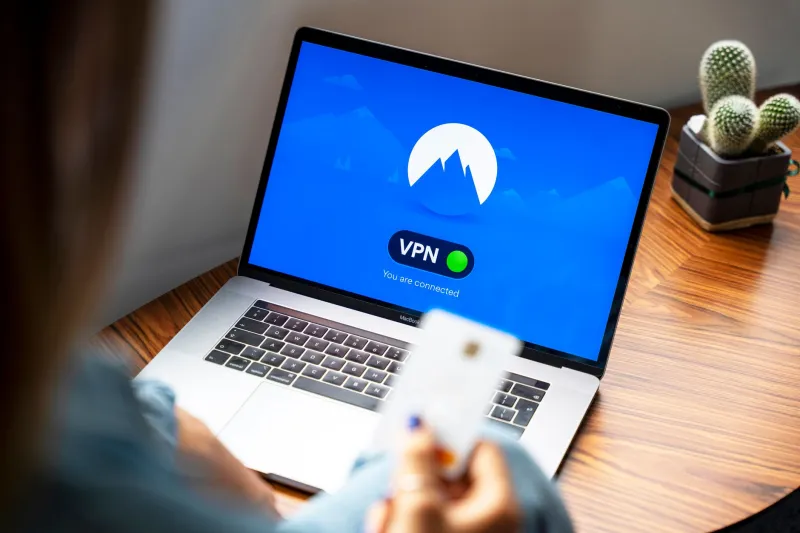
Every year, tens of millions of Americans download free VPN applications with a straightforward goal: to stay private online. The promise is simple — encrypt your connection, mask your IP address, and browse without being tracked. It costs nothing, the app stores are full of options, and the setup takes minutes. What could go wrong?
Quite a lot, as it turns out.
The cybersecurity community has long warned that when a digital product is offered at no charge, the user frequently becomes the product. Nowhere is this more acutely true than in the free VPN marketplace, where a troubling number of providers have been documented engaging in practices that directly undermine the privacy and security of their own users.
The Business Model Behind 'Free' Privacy
Legitimate VPN infrastructure is expensive to operate. Maintaining server networks across dozens of countries, encrypting billions of data packets daily, and employing security engineers to keep systems hardened against attack all require substantial investment. Reputable providers recover these costs through subscription fees.
Free VPN operators must find another revenue stream. For a significant portion of them, that stream flows directly through user data.
A landmark 2020 investigation by privacy researchers at Top10VPN analyzed hundreds of free VPN applications available on major app stores and found that a substantial number were linked to Chinese corporate entities with opaque ownership structures. More alarmingly, many collected sensitive device data — including precise location information, contact lists, and browsing histories — that bore no reasonable relationship to the task of providing a VPN connection.
The data collected through these applications is frequently sold to third-party advertising networks and data brokers, creating a commercial ecosystem in which your most sensitive behavioral information is monetized without your meaningful knowledge or consent.
From Data Harvesting to Active Malware Distribution
Data selling is, in a sense, the more passive end of the threat spectrum. At the more dangerous extreme, researchers have identified free VPN applications that function as outright malware delivery vehicles.
In 2021, security analysts documented a cluster of free VPN apps on the Google Play Store that were secretly enrolling users' devices in a residential proxy botnet. In practice, this meant that the infected devices were being used as relay nodes to route other parties' internet traffic — including potentially criminal traffic — through the victim's home network and IP address. Users had no awareness that their bandwidth was being consumed or that their IP address was potentially implicated in fraudulent or illegal activity.
Similar campaigns have targeted iOS users, with malicious VPN profiles distributed outside official app stores bypassing Apple's security review process entirely. Once installed, these profiles can intercept unencrypted traffic, redirect users to phishing pages, and facilitate credential theft at scale.
Real-World Consequences: When 'Privacy' Becomes Exposure
The abstract risks of data harvesting become concrete when examined through documented cases of actual user harm.
Consider the case of HolaVPN, a widely popular free service that was exposed for selling users' idle bandwidth through its commercial arm, Luminati Networks. Subscribers to the free tier unknowingly contributed their connections to a commercial proxy network, meaning their IP addresses could be used by paying Luminati clients for purposes entirely unknown to the original HolaVPN user. Security researchers demonstrated that this architecture could be exploited to launch distributed denial-of-service attacks that appeared to originate from ordinary residential users.
In a separate incident, the free VPN provider SuperVPN — which had accumulated over 100 million downloads on the Google Play Store — was found to contain critical security vulnerabilities that exposed users to man-in-the-middle attacks. Malicious actors positioned between the user and the VPN server could intercept traffic, potentially capturing login credentials, financial data, and private communications that users believed were encrypted and secure.
These are not edge cases involving obscure applications. They represent some of the most downloaded VPN tools in the United States.
Why Integration Matters: The Limits of Standalone Protection
Even setting aside malicious actors, well-intentioned free VPN services typically offer protection that is incomplete by design. A VPN encrypts the connection between a device and the VPN server, but it does nothing to protect against malware already resident on the device, phishing pages that a user navigates to voluntarily, or threats introduced through email attachments and downloads.
This is precisely why cybersecurity professionals advocate for integrated protection architectures rather than single-point solutions. A VPN that operates in isolation from antivirus scanning, threat intelligence feeds, and web protection filters leaves significant portions of the attack surface undefended.
Norton's approach addresses this gap directly. Norton 360, for instance, combines a no-log VPN — meaning Norton does not track, collect, or sell user browsing activity — with real-time threat detection, dark web monitoring, and secure browsing tools within a unified platform. For consumers and small business operators who may not have the expertise to evaluate and integrate multiple security tools independently, this kind of comprehensive solution removes the guesswork and the risk of misconfiguration.
Critically, Norton's VPN is governed by a transparent privacy policy and operated by a company with decades of accountability in the security industry — a stark contrast to the opaque ownership structures and data practices that characterize much of the free VPN market.
Evaluating the Real Cost Equation
The appeal of free VPN services is understandable in an era of subscription fatigue. When every streaming service, cloud storage platform, and productivity tool carries a monthly fee, the prospect of securing one's internet connection at no charge is genuinely attractive.
But the cost calculation changes significantly once the hidden expenses are factored in. The data sold by free VPN providers has tangible value — value that is extracted from users rather than paid to them. The risk of malware infection, credential theft, or IP address compromise carries potential financial and reputational consequences that dwarf any subscription savings. And the false sense of security generated by an ineffective or actively harmful tool may lead users to take risks they would otherwise avoid.
For US consumers managing sensitive financial accounts, remote work environments, or simply the ordinary volume of private information that flows through a modern digital life, the economics of professional security are more favorable than they initially appear.
Protecting What Matters
Digital privacy is not a luxury — it is a fundamental component of financial security, professional integrity, and personal autonomy in the contemporary United States. The tools used to protect it deserve the same scrutiny applied to any other security investment.
Free VPN services, as a category, have demonstrated through repeated documented incidents that they are frequently ill-suited to that responsibility. Some are actively harmful. Others are simply inadequate. Very few offer the transparency, accountability, and breadth of protection that genuine security requires.
At NortonShield Pro, we believe that informed users make better security decisions. Understanding what free VPN services actually cost — in data, in risk, and in the erosion of the privacy they purport to provide — is the first step toward choosing protection that genuinely delivers on its promise.