Silent Billing: How Fraudsters Weaponize Auto-Renewal Features to Quietly Empty Your Accounts
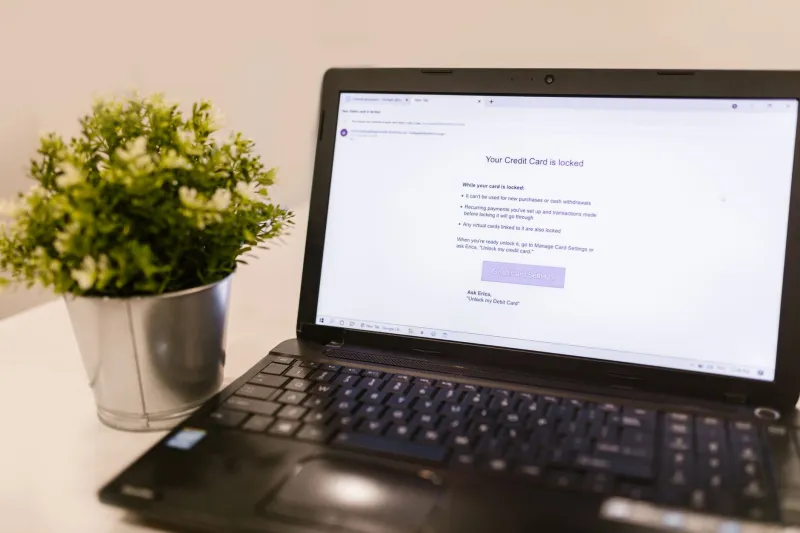
Most people associate account compromise with a dramatic event — a password reset email arriving unexpectedly, a locked screen, or a frantic message from a financial institution. The reality of modern subscription fraud is far less conspicuous. Attackers have discovered that the most profitable accounts to compromise are not necessarily those holding large balances, but those connected to auto-renewal billing systems that generate predictable, low-visibility charges month after month.
This form of financial exploitation has grown substantially in the United States over the past several years, coinciding with the explosion of subscription-based services across entertainment, software, retail, and fitness industries. Americans now manage an average of more than a dozen active subscriptions at any given time, and that sprawl creates precisely the kind of oversight gap that sophisticated threat actors are designed to exploit.
The Anatomy of a Subscription Fraud Attack
Unlike ransomware or data exfiltration, subscription fraud is engineered for patience. Attackers who gain access to a compromised account — whether through credential stuffing, phishing, or purchased breach data — do not immediately drain a bank account or change login details. Doing so would trigger an alert. Instead, they locate the payment settings, verify that a credit or debit card is stored on file, and begin enabling or escalating recurring charges.
In some cases, criminals add a secondary email address to the account to intercept billing notifications before the legitimate owner sees them. In others, they simply rely on the fact that most consumers do not scrutinize individual line items on monthly statements with sufficient care. A charge of $12.99 or $19.99 from a service name that resembles a legitimate streaming platform or software provider can go unquestioned for six months or longer.
The scheme is sometimes extended through the use of free trial manipulation. An attacker with access to a stored payment method will sign up for multiple trial-period services using the victim's credentials, knowing that the trial will convert to a paid subscription automatically. The victim receives no welcome email — it was redirected — and the charge appears weeks later, camouflaged among legitimate expenses.
Why Billing Pages Are Prime Targets for Credential Harvesting
Subscription management portals and billing dashboards represent a particularly attractive target for credential harvesting operations. These pages consolidate high-value information in a single location: stored payment card numbers, billing addresses, purchase histories, and linked bank accounts. Phishing campaigns specifically designed to mimic billing portals — from streaming services, cloud storage providers, and e-commerce platforms — have become among the most prevalent in circulation.
Security researchers have documented campaigns in which fraudulent billing pages were constructed with near-pixel-perfect accuracy, complete with functional-looking SSL certificates and domain names that differ from the legitimate service by only one or two characters. A user who receives a notification that their payment method has expired and clicks through to "update" their card details may be submitting that information directly to a criminal infrastructure.
Once payment credentials are harvested at this stage, the attacker's options expand considerably. The card data may be used for direct fraudulent purchases, sold on underground marketplaces, or used to fund new subscription accounts that are then resold or leveraged for further fraud.
Real-World Patterns: What the Cases Reveal
Consumer financial protection agencies in the United States have documented a consistent pattern in subscription fraud complaints. Victims typically report that unauthorized charges appeared gradually, often beginning with small amounts below $25, before escalating once the attacker confirmed the payment method was active and unmonitored. In a notable category of cases, victims did not discover the fraud until they reviewed their annual credit card summary — meaning some charges had persisted for nearly twelve months.
Small business accounts are disproportionately affected. A company with multiple software-as-a-service subscriptions spread across different departments may lack the centralized oversight required to detect an anomalous recurring charge. An attacker who gains access to a business email account used for billing correspondence can redirect invoices, approve fraudulent charges, and operate undetected within the financial noise of a busy organization.
Auditing Your Recurring Charges: A Structured Approach
The most effective defense against subscription fraud begins with a complete inventory of your recurring financial obligations. This process is more involved than most consumers anticipate.
Review every statement line by line. Set aside time each month to examine your credit card, debit card, and bank statements at the transaction level. Do not rely on category summaries or spending aggregators alone, as these tools may group fraudulent charges under familiar merchant categories.
Contact your card issuer about unfamiliar merchant names. Subscription services frequently bill under parent company names or abbreviated identifiers that do not match the product name you recognize. If a charge is unfamiliar, verify it before dismissing it as a minor discrepancy.
Log into each active subscription account directly. Navigate to the billing or subscription management section of every service you use and confirm that the payment method on file is your own, that no secondary email addresses have been added, and that the subscription tier reflects what you originally selected.
Use a dedicated card for subscriptions. Isolating recurring charges to a single payment method significantly simplifies monitoring and limits the exposure of your primary financial accounts. Many financial institutions and fintech services offer virtual card numbers that can be restricted to specific merchants or spending categories.
Enable transaction alerts on all accounts. Real-time notifications for every charge — regardless of amount — remove the window of opportunity that subscription fraud depends upon. A $9.99 charge that triggers an immediate alert is far less likely to persist undetected than one that appears quietly on a monthly statement.
Locking Down Payment Methods Before Criminals Do
Beyond monitoring, proactive account hardening is essential. Begin by reviewing the payment methods stored across every online account you hold. Remove any cards that are no longer in active use, and avoid storing payment credentials on platforms where you make only occasional purchases.
Enable multi-factor authentication on every account connected to a payment method. While no authentication layer is entirely impervious — as prior coverage on this site has examined — it substantially raises the cost of unauthorized access. Attackers operating at scale will frequently move on to less-protected targets rather than invest the additional effort required to bypass a secondary authentication factor.
For business environments, implement a formal process for reviewing and approving recurring software subscriptions. Assign ownership of each subscription to a specific individual and establish a quarterly audit cadence. Centralized billing management, where all SaaS invoices route through a single monitored inbox, eliminates the departmental blind spots that attackers rely upon.
Finally, consider the value of comprehensive digital security software that includes identity monitoring capabilities. Solutions such as Norton's consumer and business protection suites are designed to alert users when their personal information — including email addresses and payment credentials — appears in data breach repositories or on underground marketplaces. Early detection of a compromised credential is the single most effective way to prevent it from being used in a subscription fraud scheme before the first unauthorized charge ever appears.
The Convenience Calculus Has Changed
Auto-renewal billing was designed to reduce friction for consumers and service providers alike. It has also created a persistent, low-visibility financial surface that cybercriminals are actively and systematically exploiting. The charges are small by design, the detection window is long by design, and the victim's own inattention is a core component of the attack model.
Treating your subscription portfolio with the same scrutiny you would apply to any other financial asset is no longer optional. In the current threat environment, a recurring charge you cannot immediately identify is not a minor administrative matter — it is a potential indicator of compromise that warrants immediate investigation.