Digital Gold, Real Danger: How a New Breed of Cybercriminal Is Draining Crypto Wallets Across America
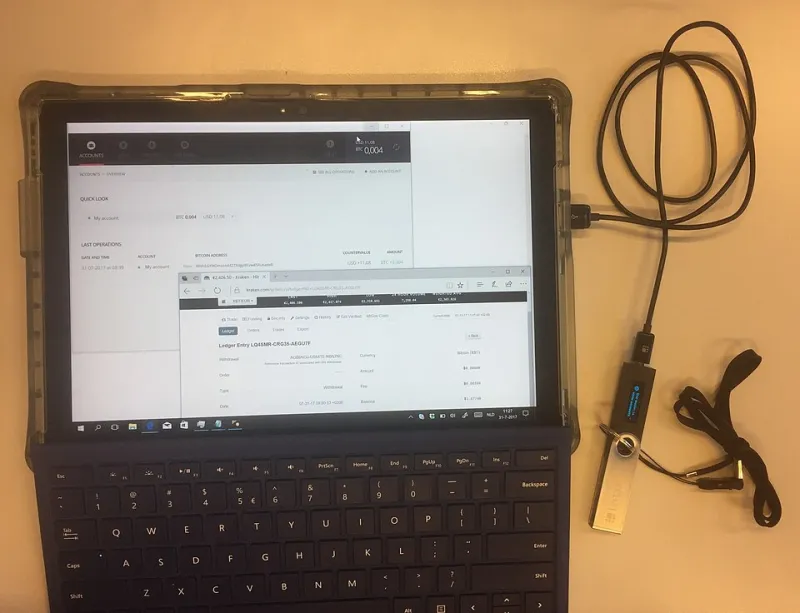
Photo: FlippyFlink, CC BY-SA 4.0, via Wikimedia Commons
The promise of cryptocurrency has drawn tens of millions of Americans into the digital asset space. According to recent survey data, nearly one in five U.S. adults now owns or has owned some form of cryptocurrency—a statistic that has not gone unnoticed by the criminal underground. Where wealth accumulates, predators follow, and a new generation of technically sophisticated thieves has pivoted its focus squarely toward the mechanisms that store, transmit, and secure digital assets.
Unlike a fraudulent charge on a credit card, a stolen cryptocurrency transfer cannot be reversed by calling your bank. The blockchain is immutable by design. Once a transaction is confirmed, the funds are gone. That single characteristic transforms every vulnerability in the crypto ecosystem—however small—into a potentially catastrophic and permanent financial loss.
The Anatomy of a Modern Crypto Attack
Cybercriminals targeting digital wallets rarely rely on a single tactic. Instead, they construct multi-stage attack chains designed to overcome each layer of a user's defenses in sequence.
Clipboard hijacking represents one of the most insidious and underappreciated methods in active use today. Cryptocurrency wallet addresses are long, complex strings of alphanumeric characters—virtually impossible to memorize or type manually. Most users copy and paste them. Malware known as a "clipper" silently monitors the system clipboard and, the moment it detects a wallet address has been copied, replaces it with an address controlled by the attacker. The victim pastes what they believe to be the correct destination, confirms the transaction, and the funds are irretrievably redirected.
Wallet-draining malware has grown considerably more sophisticated in recent years. Infostealer variants such as Redline and Vidar are now routinely updated to target browser extension wallets—MetaMask being a prime example—by extracting encrypted vault files and session tokens. If a user's system password is weak or has been previously compromised in a data breach, attackers can decrypt these vault files offline and gain complete access to the stored assets.
Fake wallet applications represent another high-yield attack vector. Fraudulent apps mimicking legitimate wallets such as Trust Wallet, Exodus, or Ledger Live have appeared in third-party app stores and, on occasion, have briefly circumvented the review processes of major platforms. These counterfeit applications are designed to capture seed phrases at the moment of wallet creation or import—before the user has any reason to suspect compromise.
The Social Engineering Layer
Technical malware delivery is only one side of the threat. Equally dangerous—and arguably more effective—is the psychological manipulation that precedes it.
Crypto-targeted phishing campaigns have become extraordinarily refined. Attackers create convincing replicas of exchange login pages, wallet service portals, and even IRS cryptocurrency reporting notices. The urgency embedded in these communications is deliberate: messages warning of account suspension, unconfirmed transactions requiring immediate action, or unexpected tax liabilities are engineered to override rational caution.
A particularly damaging variant is the seed phrase recovery scam. Victims receive unsolicited contact—via social media, Discord, Telegram, or email—from individuals posing as technical support representatives for a wallet provider or exchange. The attacker claims there is an issue with the victim's account and requests the 12- or 24-word seed phrase to "verify" or "restore" wallet access. No legitimate service will ever request a seed phrase. It is the master key to a wallet, and anyone who possesses it has unconditional and permanent control over every asset inside.
Romance and investment scams involving cryptocurrency—colloquially termed "pig butchering" by law enforcement—have cost Americans billions of dollars. In these schemes, criminals cultivate trust over weeks or months through fabricated romantic or professional relationships before steering victims toward fraudulent investment platforms. The FBI's Internet Crime Complaint Center (IC3) consistently ranks these schemes among the highest-loss cybercrime categories reported each year.
Hardware Wallets Are Not Invulnerable
Many experienced investors correctly understand that hardware wallets—physical devices that store private keys offline—offer substantially stronger protection than software alternatives. However, a common misconception holds that hardware wallets are essentially impenetrable. They are not.
Supply chain attacks, where counterfeit or tampered hardware devices are sold through unauthorized resellers, have been documented. These devices may be pre-configured to transmit seed phrases to attackers upon first use. Purchasing hardware wallets exclusively from the manufacturer's official website is non-negotiable.
Additionally, the security of a hardware wallet is only as strong as the security of the computer it connects to during transaction signing. A device infected with sophisticated malware can manipulate transaction details displayed on screen, causing the user to unknowingly approve a transfer to a malicious address—even while the hardware wallet displays seemingly correct information.
Actionable Defenses for the American Crypto Investor
Protecting digital assets requires a defense-in-depth approach that mirrors the layered nature of the attacks themselves.
Secure your seed phrase offline and physically. Write it on paper—or better, engrave it on metal—and store it in a physically secure location. It should never exist in a photograph, a cloud note, an email draft, or any digital format. A seed phrase stored on a device connected to the internet is a seed phrase at risk.
Verify every wallet address character by character before confirming a transaction. Clipboard hijacking malware depends on users not performing this check. Comparing the first four and last four characters of a pasted address against the original source is a minimum standard.
Use a dedicated, purpose-limited device for high-value transactions where feasible. A computer used exclusively for cryptocurrency management—without general web browsing, email access, or software installation—dramatically reduces the attack surface available to malware.
Enable address whitelisting on exchanges. Most major U.S.-based exchanges allow users to restrict withdrawals to pre-approved addresses only. This feature, combined with a time-lock delay, can prevent unauthorized withdrawals even if an account is compromised.
Maintain comprehensive endpoint protection on every device used to access crypto assets. This is not optional. Sophisticated infostealer malware, fake browser extensions, and trojanized software packages are in active circulation. A robust security solution that monitors for behavioral anomalies—not merely known malware signatures—is essential for detecting the novel threats that the crypto theft ecosystem continuously produces.
Why Crypto Theft Demands a Proactive Security Posture
The irreversibility of blockchain transactions means that the window between a successful attack and a permanent, unrecoverable loss is measured in minutes—sometimes seconds. There is no fraud department to call, no chargeback mechanism to invoke, and no regulatory body with the authority to compel the return of stolen funds.
This reality fundamentally shifts the calculus of cybersecurity for digital asset holders. Reactive measures are insufficient. The only viable strategy is one that prevents malware from gaining a foothold, identifies suspicious behavior before a transaction is executed, and ensures that every layer of the digital environment—from the browser to the operating system—is actively monitored and defended.
The growth of cryptocurrency adoption across the United States has created an enormous and largely unguarded attack surface. The criminals targeting it are not amateur opportunists; they are organized, technically proficient, and continuously refining their methods. Meeting that threat requires an equally serious and sustained commitment to digital security—beginning with the devices and networks through which every wallet interaction occurs.