Dormant by Design: How Your Forgotten Software Subscriptions Quietly Open Doors for Cybercriminals
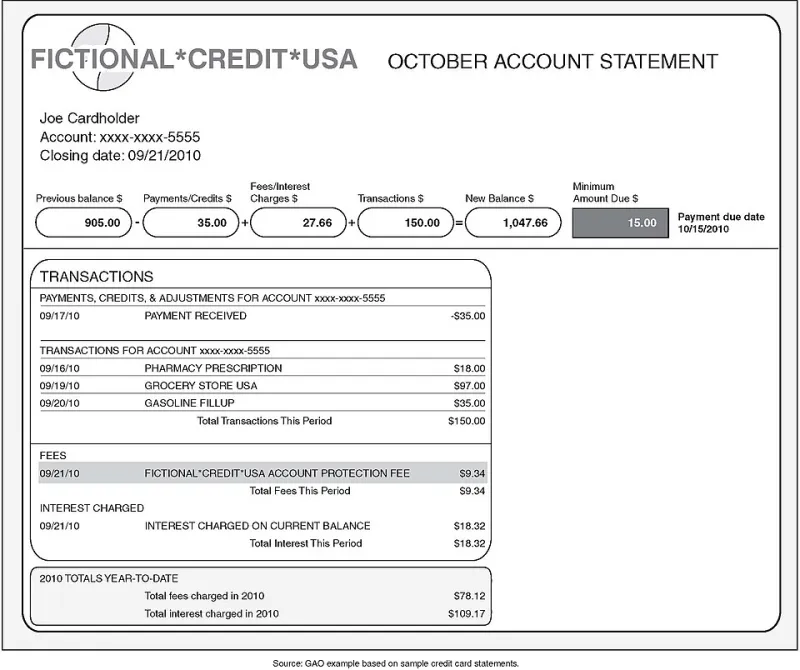
Photo: U.S. Government Accountability Office from Washington, DC, United States, Public domain, via Wikimedia Commons
There is a particular kind of digital clutter that accumulates silently, invisible until it causes harm. It does not announce itself. It does not trigger alerts. It simply sits — renewing month after month, year after year — while the software it funds grows older, less maintained, and considerably more dangerous.
For cybercriminals, your forgotten subscriptions are not inconveniences. They are invitations.
The average American household now maintains between 12 and 20 active software or digital service subscriptions at any given time, according to industry research. A significant portion of those subscriptions are either redundant, rarely used, or entirely forgotten. Each one represents a thread in a web of stored payment data, login credentials, and billing records — and that web, left unattended, becomes an extraordinarily attractive target.
The Architecture of a Subscription Attack
To understand why dormant subscriptions carry such outsized risk, it helps to trace the anatomy of a recurring billing relationship. When a consumer signs up for a software subscription, they initiate a chain of data storage events that extends far beyond the application itself.
Credit card numbers, billing addresses, email addresses, and device information are deposited across multiple systems: the vendor's own database, one or more third-party payment processors, and often a subscription management platform operating somewhere in between. Each of these repositories becomes a potential breach point.
The danger compounds when that subscription ages. Software vendors who lose customers frequently deprioritize security investment for legacy platforms. Databases holding billing records from discontinued or low-engagement tiers may receive fewer patches. The payment processor used five years ago may have since undergone ownership changes, infrastructure migrations, or security downgrades. Meanwhile, the consumer has moved on — unaware that their financial and personal data still resides in these systems, waiting.
Attackers understand this dynamic well. Credential stuffing campaigns — in which threat actors test stolen username and password combinations against hundreds of services simultaneously — disproportionately target older subscription accounts precisely because those accounts are less likely to have updated passwords, enabled multi-factor authentication, or been monitored for suspicious activity.
Why Billing Databases Are High-Value Targets
Payment processors and subscription billing platforms represent some of the most concentrated repositories of sensitive consumer data in existence. A single breach of a mid-tier subscription management vendor can expose the financial details of hundreds of thousands of customers across dozens of software products.
This concentration effect is not lost on sophisticated threat actors. Rather than attacking individual consumers one by one, criminal organizations increasingly target the infrastructure layer — the billing platforms, renewal engines, and payment APIs that underpin the subscription economy. A successful intrusion at this level yields data at scale, with minimal incremental effort.
The 2023 MOVEit file transfer vulnerability, which cascaded through countless organizations using shared third-party infrastructure, illustrated precisely this logic. Attackers who compromise a single point in a widely used ecosystem can extract value from thousands of downstream victims simultaneously. Subscription billing infrastructure operates on the same principle of centralized vulnerability.
For consumers, the implication is sobering: even if your individual account practices are sound, the vendor holding your renewal data may not share your commitment to security hygiene.
The Abandoned Account Problem
Abandoned accounts represent a distinct and particularly acute risk within the subscription ecosystem. When a consumer stops using a service but fails to formally cancel, the account typically remains active, accumulating auto-renewal charges and — critically — retaining all stored data in an essentially unmonitored state.
These accounts are attractive to attackers for several reasons. First, the legitimate account holder is unlikely to notice unusual activity promptly, if at all. Second, the associated email address may itself be dormant, meaning password reset notifications and security alerts go unread. Third, older accounts frequently predate the widespread adoption of security best practices, meaning they may still rely on passwords that have since appeared in breach databases.
Once an attacker gains access to an abandoned subscription account, the possibilities extend well beyond that single service. Subscription platforms often store payment methods that can be exploited for fraudulent purchases. Connected social login credentials can serve as pivot points into other services. And the billing address and card details on file can be harvested for identity fraud operations.
Mapping Your Subscription Footprint: An Actionable Audit
The first step toward eliminating this attack surface is achieving visibility into its full extent. Most consumers dramatically underestimate the number of services holding their data. A disciplined audit process can surface that hidden inventory.
Review your bank and credit card statements. Filter for recurring charges across the past 12 to 24 months. Flag every vendor name that appears on a regular billing cycle, including those you do not immediately recognize. Unknown charges are not merely a billing nuisance — they may indicate either unauthorized account creation or a subscription you have genuinely forgotten.
Search your primary email inbox for subscription-related keywords. Terms such as "renewal," "invoice," "your subscription," and "billing confirmation" will surface a significant portion of your active and dormant service relationships. Pay particular attention to welcome emails from services you no longer use — these indicate accounts that may still hold your data.
Audit your password manager or browser-saved credentials. Every stored login represents a service that holds some form of your personal information. Cross-reference these against your billing statement audit to identify accounts that are active but unused.
Check for connected applications. Both Google and Apple provide dashboards listing third-party applications authorized to access your accounts. Many of these carry implicit subscription or data storage relationships. Revoke access for any application you do not recognize or actively use.
Once your full subscription inventory is mapped, prioritize cancellation and formal account deletion — not merely cancellation — for any service you no longer use. Many platforms retain user data indefinitely after cancellation unless a formal deletion request is submitted. Invoking your rights under applicable data privacy frameworks, including the California Consumer Privacy Act for US residents in eligible states, can compel vendors to purge your records.
Securing What You Choose to Keep
For subscriptions you intend to maintain, a layered approach to account security is essential. Enable multi-factor authentication on every platform that supports it. Use a unique, complex password for each service — a discipline that becomes manageable only with a reputable password manager.
Consider using a dedicated virtual card number, available through several major US banks and fintech services, for subscription billing. Virtual cards can be locked or deleted without affecting your primary account, providing a clean mechanism for halting unauthorized renewals and limiting the blast radius of any billing database breach.
Finally, establish a quarterly review cadence. The subscription landscape shifts constantly — services are acquired, infrastructure is migrated, security postures evolve. A habit of regular review ensures that your exposure remains bounded and intentional rather than sprawling and forgotten.
The Broader Lesson
The subscription trap is, at its core, a visibility problem. Cybercriminals thrive in the gaps between what consumers believe their digital footprint looks like and what it actually is. Every dormant renewal, every forgotten login, every unreviewed billing relationship represents one of those gaps.
NortonShield Pro's broader mission rests on a foundational principle: effective defense begins with comprehensive awareness. You cannot protect what you cannot see. By treating your subscription inventory with the same seriousness you would apply to your financial accounts or home security systems, you transform a sprawling and unexamined liability into a managed, monitored, and substantially more defensible asset.
The door your forgotten software subscription left open does not have to remain that way. Close it deliberately, close it completely, and close it now.